Sunday, February 21, 2016

Philadelphia Museum of Art

In December, I went to Philadelphia to my last medical school interview at a nice SOM that I will not attend. It was pouring rain when I arrived, when I interviewed, and when I left, and thus I spent most of Interview Eve in the Philadelphia Museum of Art or on public transit, which, by the way, is extremely well-organized and charmingly old-fashioned.

Though I did eventually see the Liberty Bell and walk by Independence Hall, it was so dark and rainy that I accomplished no real sightseeing. If anything, the views from the train and the window of my Uber to the airport were more successful at stirring up the whirlwind feelings of being in a new city. Also, walking around the campus during the interview in the pouring rain in a suit was downright miserable.

Also, I learned that the Schuylkill River is approximately pronounced "Scoogle" or "Scookle."

All this is to say that due to inclement weather, all I really have to show for my trip to Philly are some photos I took in the museum, which was one of the most splendid and awe-inspiring collections I've ever seen. In spite of my disappointment of not being able to see the city, I was more than satisfied with what I saw in the PMA.


Left: Right Shoulder, Arm, and Hand; Front of Male Torso;Right Side of Head; Right Foot; Right Thigh, Leg, and Foot; Left Knee; Front of Neck and Part of Shoulder

Right: detail of Right Side of Head

All by Thomas Eakins


The Gross Clinic -- 1875, Thomas Eakins


The Agnew Clinic -- 1889, Thomas Eakins


Sunflowers -- 1888, Vincent van Gogh


The Abduction of Europa - 1727, Noël-Nicolas Coypel


The Burning of the Houses of Lords and Commons - 1835, J.M.W. Turner

I have always loved Turner's paintings, which have such a distinctive dynamic, yet ethereal, style to them. I didn't know much about the collection at the PMA so seeing this in the gallery was a pleasant surprise. In addition to the photos here, there was a special exhibit on the Prometheus myth, showcasing masterpieces by Rubens, Michelangelo, and Titian that absolutely stunned me. Unfortunately, no photos allowed, but the museum site has plenty of information.

The two Eakins paintings shown above were housed in the same gallery across from one another with a bench in between. How can I describe the feeling of being a lowly medical school interviewee in a new city, staring at two significant paintings in medical history? There are many, many analyses of The Gross Clinic and The Agnew Clinic separately and together, and I could not try to look for meaning that others have missed.

I tried to edit the photos to recreate how I remember the paintings to look like. In the dark red gallery, the dark and cool-toned Dr. Gross presides like a wise, stately angel over his somber operating theater. Dr. Agnew's lecture is light and warm, and look how the standard of professional medical care has transformed.

So, I sat in that gallery for at least fifteen minutes, looking back and forth between Drs. Gross and Agnew. From childhood, I have always wanted to be a surgeon, and since then, I have worked ever closer to that dream. At the time, I had not been accepted into medical school, so seeing these paintings was more desperately aspirational than resolutely motivational, but you can imagine how I felt.

Anyhow, I hope I can put together a post about other art on the interview trail, but the recent death of my phone may make that difficult. I leave you with some readings about the Eakins paintings: [0] [1] [2] [3] [4] [5]

Sunday, February 14, 2016

L.L. Bean wool sweater puzzle


It's been feeling quite a lot like springtime in the Bay Area, but it's still winter in my future home of Boston, so this post about wool sweaters is reasonably justified.

Since about November, I have been consistently wearing the either a thin black or thin charcoal grey wool-blend sweater every day that dips below 65 deg F. Thoughts about a cold New England winter brought me to browse the website of one old faithful New England institution: L.L. Bean. Be still, my trad-wannabe heart.

It is not easy to find a middle/heavyweight wool sweater in the simple, conservative style that I want. I feel as if I've struck soft gold with these tried and true L.L. Bean pieces, but the above three sweaters are all men's sweaters. All the women's sweaters at the same wool composition are inexplicably far more expensive, and many are too flashy or colorful for boring me.

Beyond the gendering of clothing and unavailability of things that I want in my size and preferred color, what irks me most is that women's sweaters of similar composition (% wool) are more expensive than men's, and that as far as L.L. Bean is concerned, there are fewer options at that composition. I'm sure that there is enough demand for boring wool sweaters in solid colors that perhaps L.L. Bean could remove gender from the marketing and carry a wider range of sizes.

The men's S, at 34-36 inches across the chest and over 30 inches in length, would overwhelm my frame. Wool, however, does shrink in the dryer, but that solution seems more like an expensive gamble in my hands.

As for my sweater aesthetic:


Audrey Hepburn in Sabrina, John F. Kennedy on the campaign trail, and Bush Sr. 

Tuesday, February 9, 2016

Letters of recommendation | Applying MD


Old-fashioned paper envelopes because a stock image of a PDF would not be that exciting.

There is a veritable bounty of resources, threads, and guides about getting good LORs, but I ran into a few issues early this cycle that have caused me a bit more stress than needed. Many of these written (and anecdotal) resources are ambiguous and/or not helpful in answering my specific questions.

This post will not tell you how to build strong relationships with letter-writers, and it (obviously) draws heavily from my personal experiences. However, my questions may well be ones that you are wondering about as well.

Letters that I used:

1 PI letter: professor, mechanical engineering, did not take a class with
2 engineering faculty letters: mechanical engineering professor (course classified as Physics on AMCAS), bioengineering lecturer (course classified as Biology on AMCAS)
1 biology faculty letter: general biology (huge class) lab TA, cosigned by the professor, whom I have never spoken to in person
1 humanities professor letter: upper division class
1 clinic volunteering letter

With the exception of the biology letter, I regularly went to office hours and built up good relationships with these faculty members. They knew me well and were pretty eager to write a letter on my behalf (except for the mechanical engineering professor, who erroneously thought that only the only faculty that should write LORs for med school were PI's, and thought I was choosing him over his colleague whose lab I did work in...but explanation brought him around).

Why did I ask for that biology letter, then?

Engineering majors will probably know the answer, and I'll address it with the biggest LOR question I've had this cycle:

1. Most medical schools require letters from faculty in the SCIENCES. Do letters written by faculty in engineering with whom you've taken engineering classes count towards this requirement?

Put simply: does engineering count as science?

The short answer: YES. However, the internet is frustratingly vague on this front, and anecdotal evidence was not particularly helpful, especially since most of my premed friends were not engineering majors. While it seems absurd that engineering would not be considered 'science,' this presumption is furthered by the AMCAS course classification table that outlines engineering disciplines as falling outside of BCPM.

As an aside, I successfully assigned the vast majority of my bioengineering and mechanical engineering classes as BCPM (B and P), and a materials science course as C. However, I did assign my independent research class and a MATLAB class as 'Engineering.'

The caveat to this letters of recommendation thing is that this post is still anecdotal evidence at best, and I strongly encourage anyone who is concerned about their letters not fulfilling requirements to verify their validity on their own. After you are verified by AMCAS (hopefully you will submit early) or even earlier, call each school you are applying to and get the answer from the admissions office.

I'm not joking. As it turned out, almost every single school accepted my preferred four letters (PI, engineering faculty, and clinic), and I only used the weak biology letter and humanities one two or three times.

Working backwards in time, here is another question I grappled with:

2. When should my letters of recommendation be in?

A side questions: is asking for a letter from a spring semester junior year professor (if applying in the summer after junior year) cutting it close?

Letters of recommendation are needed to be 'complete' at a medical school. Though they are mentioned on AMCAS and will be sent to schools through AMCAS, they are not 'due' when you submit your primary. Since you don’t want your application to be unnecessarily delayed, you want your LORs uploaded onto AMCAS well before you plan on submitting any secondaries, just to be safe.

Because I was unclear on this (a very popular internet premed resource for the UC system spread information that LORs should be ready at the primary stage) I had my writers submit their letters to the Career Center letter service by the first week of June. Biology letter blew this 'deadline,' but I didn't use that letter much anyways. If you want to submit secondaries right as they come out (maybe you submitted AMCAS early, and prewrote like I did not), mid-June is a good ball-park deadline. Virtues of being early in this process aside, 4-6 weeks is a good amount of time to give someone to write a letter. Because UC Berkeley ends the semester in early May, I was able to get a letter from someone I took a class with in the spring semester after regularly attending his office hours over the prior few months.

And going farther back in time:

3. Who should I ask for letters of recommendation and when?

Who: a faculty member (professor or lecturer) who knows you well and can vouch for your intelligence and diligence in their class. Hopefully, you've gone to their office hours and asked insightful questions, and are able to have conversations with them about relevant topics not explicitly covered in the lecture material

When: regardless of if you take their class, ask for a letter after you've developed good rapport with them. Ask them around finals week or shortly before so you'll be fresh in their mind, even if it will be another year when you apply. The spring before your application summer, ask them formally for a letter of recommendation, and get on them to stick to deadlines.

Professors do this sort of thing all the time, and part of their job is to help students of the university achieve their post-graduate goals. However, this certainly does not mean you are entitled to a letter, and learn how to receive rejection or reluctance with grace.

As for how to get the letters to AMCAS, Interfolio is a good idea. I personally used the Career Center letter service, and avoided some (anecdotal) problems of delays and lost letters by doing everything electronically and early. I don't regret setting an early June deadline, and fortunately, I did not have any trouble with my letters this cycle. I've left quite a bit out, but these were just the points that I particularly wanted clarification on when I was at this point in the application cycle.

However, I strongly recommend an external service like Interfolio simply because I would like to have certain access to those documents in case I had to reapply.

4. Closing thoughts

I may have made a mistake in some of my faculty letters, but that comes from the fact that I was a wimp and seldom pushed myself out of my comfort zone to really get to know professors. I'm sure that one of my engineering letters, and most certainly the biolog letters were weak. I also wish that I had gotten a letter from my Spanish teacher as my humanities letter since foreign languages are high-effort classes that significantly show your participation and the way you handle unfamiliar material.

I wish I'd used Interfolio, but no harm, no foul.

Go to office hours.

Sunday, January 24, 2016

Spring semester forecasting

Gloomy woods in Tilden Park

Now this is the final hurrah at UC Berkeley. The objective of this semester is this: I must become a well-rounded adult. I must prepare myself to be an educated, self-sufficient, autonomous, capable, thinking member of society, and future physician. MY GPA DOES NOT MATTER AT THIS POINT but holy Hell do I want to graduate cum laude or magna cum laude. I can take the classes that I think will most fortify my knowledge, but also be fun and interesting. I do not plan on attending any more medical school interviews, and have turned down/withdrew from a few schools. I will throw all of my free time into (1) making the most out of the last semester with my close friends, (2) finishing my research projects and publishing, and (3) making the most and best positive change at the Berkeley Free Clinic. I'll probably find a hill to figuratively die on.

Without further ado:

"A placeholder title for a class for semi-privacy reasons" (4 units, letter graded): this is an upper division class cross-listed between bioengineering, including about an even split of undergrads and grad students, having to do with the design and performance of medical implants, with particular focus on mechanics and materials science. With that description, a clever snoop can probably find exactly which class this is. The reason for the vague title is that this class is taught by my PI, in whose lab I have worked since the summer after freshman year. Needless to say, I am thrilled to be in this class, which is taught by a mentor and professor whom I have always admired, about a subject that I have always been interested in. I entered college and my bioengineering major dreaming about medical implants, I have worked in a research lab studying implant failure, and will continue pursuing this interest into medical school, and hopefully the rest of my career. Furthermore, my favorite classes at UC Berkeley have been those upper division bioengineering courses that have this huge mix of students: bioengineering, mechanical engineering, materials science and engineering...group projects + the scholastic melting pot have made the most rewarding learning experiences I have ever been privileged to have. My classmates are incredibly diverse and I have much to learn from them.

Intermediate Spanish (5 units, letter graded): finally. One of my ultimate goals of college was to improve my Spanish from the level I took the AP Spanish test at in 2011. It turns out that my skills have atrophied: I am not as proficient in speaking nor understanding, and my grammar is more haphazard. There's no remedying it except for taking a class and working hard to learn it, practicing every day, and willing myself to learn a language and learn it well. I will have Spanish-speaking patients in the future, and I hope that by improving in this area, I can better serve them.

The Structure and Interpretation of Computer Programs (4 units, P/NP): the introductory computer science course, taught in Python. After hanging out with my majority EECS and CS friends for the past 3.5 years, I will finally see what the fuss is about. I don't anticipate programming much in my future, but CS 61A is one of those quintessentially UC Berkeley courses, with a staggering >1000 enrollment a notoriously difficult professor (the infamous Prof. Hilfinger), and an almost mythic status as a general interest course of the 21st Century. I'm the only senior in my discussion/lab section, and one of the very few non-freshmen. An old dog can learn new tricks!

Wealth and Poverty (4 units, P/NP): this is another mythic UC Berkeley class, taught by former United States Secretary of Labor, and prolific Facebook soapboxer Prof. Robert Reich. I'm hesitantly excited for this class because I want to become more knowledgeable about the intersection of politics, economics, and society in this country...but Robert Reich's reputation precedes himself, as a loud, outspoken Left-wing radical, a decrier of GOP shenanigans, etc. These are not bad things, but I'm on the quest to build a political opinion of my own, which includes the decision of who to vote for in the Democratic primaries. First lecture down and he's emphasized that his political ideology is unimportant for the course, and that we should develop our own based on critical thought and research. So far, so good. An interesting feature of this course is that Prof. Reich hosts a small(er) group discussion after lecture; in the first "salon" of the semester, I asked my question and he answered, all in the presence of the film crew that had been recording all lecture.

Also: my total textbook cost of the semester thus far is a whopping $0, which is down from last semester's $15.

Wednesday, January 20, 2016

Finally pre-med


A late afternoon picture of Cleveland's Little Italy. Very little relevance to the post below, actually

Recently, I was admitted to Boston University School of Medicine's class of 2020. I got the news in Safeway,  wept in public, and am still riding the bliss of knowing that I do have a future in medicine, that I will become a doctor. So ended my agony of the cycle, washed away all plans of gap year jobs and reapplication, and undermined many of the self-loathing/doubting/destructive thoughts that have been lurking in my brain these past few weeks.

More importantly, I realize that I have to shift my way of thinking of myself and what my work must be for. For the last 3.5 years, I have predominantly seen myself as a college student working towards becoming a medical school applicant. Now, it is clear that I must reevaluate myself, and redefine myself: I am a future medical student, and a future doctor. My goal now must be what I had always wanted it to be. I must strive to become a good person, a good physician, and learn to practice medicine.

The title of this post references my discomfort with the term pre-med, which I've written about before. In short, I've never liked identifying myself as such, since there is so much uncertainty in college anyhow, no matter how resolutely I believed I wanted to become a doctor. Also, early on in college, I felt alienated from other bioengineering majors for feeling strongly about applying to medical school. Until recently, when I learned that a significant portion of graduating seniors pursue consulting jobs (Deloitte, Accenture, etc), I felt like an inferior black sheep of the BioE flock because I one of those losers that wasn't going to become an engineer and use her degree.

The shame of being an engineering quitter is unreasonable. It's actually completely stupid since I've known since childhood that I wanted to be a doctor. Berkeley engineering has taught me valuable lessons, taught me how to think critically, design methodically, and solve problems logically, but it was ultimately a means to an end. My research lab has been a home away from home, my graduate student mentor become a general life coach, and my fellow undergrad worker bee a close friend. For a long time, I illogically felt unwelcome in BioE. Let me add, too, that some of the other pre-med BioE people participate in many more engineering-related things than I do.

I digress. The point of the title is that now, only now that I've gotten into med school do I feel comfortable with that descriptor. I am pre-med: for the next few months, I will be a person in the prologue of my medical career. In August, I will matriculate. It's just a stupid phrase. It's silly that I should feel the way that I do, but I'm understanding that now. In the next few months, I need to work on myself, my self-esteem and confidence, and my emotional health. I need to work on broadening my understanding of the health care system in this country, and read and write as much as possible.

Before I end this navel-gazing post, I must add that I am thrilled to have been admitted to BUSM, and to potentially live in BOSTON for the next 4 years. Between elation at attending one of my favorite schools I interviewed at and the staggering anxiety at the amount of information, skills, and responsibility that I must take up during med school...I'm kind of drained.

Sunday, January 17, 2016

Cleveland


In early November, I interviewed at the two MD programs at Case Western Reserve University: the 4 year University Track and the 5 year College Track (aka Cleveland Clinic Lerner College of Medicine). I stalled on posting these pictures since there were all holy shit autumn leaves that were very similar, but all too dear for me to delete. These pictures, with the exception of these early ones of the city and a few at the end, were all taken at the Lakeview Cemetery. For the sake of aesthetics, the text won't necessarily describe the closest photos.


Cleveland in early November was a ridiculous blast of colors. Flying in over the drab Lake Erie and having my first glimpse of the state of Ohio be city + near confluent mass of red/orange/gold deciduous trees was absolutely jawdropping.


I took a train eastbound from Puritas Station to University Circle at around sunset. Cleveland literally looked like it was on fire. These are my favorite pictures from my trip since they capture the incredible autumn foliage and also the remnants of infrastructure and industry that formed my preconceptions of Cleveland. Would you believe me if I said I hardly edited these pictures?

Left: my CWRU student host's darling cat
Right: a basic boots + autumn leaves picture

Because I had interviews on Monday and Wednesday, I stayed in Cleveland for three days and three nights. On Monday night, I took a bus from the Cleveland Clinic to Cleveland Heights, the most picture perfect autumnal suburb I had ever seen. Since it was shortly after Halloween, walking at night in this part of Cleveland was spooky rather than scary, and actually pretty enjoyable. I have few pictures of Cleveland Heights, but imagine many brick houses, trees and their leaves everywhere, and curvy streets. My student host told me it was designed to reduce deer deaths by car. I don't know how true that is, but a buck did jump across my path during my nighttime walk.


On Tuesday, I explored Cleveland Heights, Little Italy, University Circle, and Case campus. My host dropped me off at the medical school, and I promptly went east towards the cemetery. Nothing quite like a stroll in a historical graveyard among autumn leaves to reflect on my own mortality, dwell on my abysmal performance at my CCLCM interview, and worry about CWRU on Wednesday.


I got to see the chapel, Rockefeller's memorial site, the mausoleum, and Hoover's monument.


After that, I went through Little Italy, University Circle, and Case campus. I had coffee and a bagel at a cute coffee house, then spent the vast majority of my day at the Cleveland Museum of Art. I'm far from an art connoisseur, but I enjoyed its collections, and was right at the level of Cantor, the free museum at Stanford. Because the CMA was free, I ended up going back to it a few times during the day.


There was also a little museum of medical history, with a special exhibit on childbirth, on Case campus. The same building had a beautiful, old-fashioned library, luxuriously decorated with oil paintings, antique medical equipment, and antique furniture. It reminded me of the Morrison Library at Cal, but much larger.


Creepy stumps


I did not see much of the city beyond the Cleveland Clinic itself, Case Western campus, Little Italy, and Cleveland Heights. I've deliberately left out most of the medicine-related details, which are the details that an applicant might find useful, but I have relatively little to say about either CCLCM or CWRU that is not mentioned on MSAR, the program websites, etc.


The Coffee House at University Circle: cute little place for a morning coffee and afternoon bagel and nap

That's all I have to say about Cleveland.


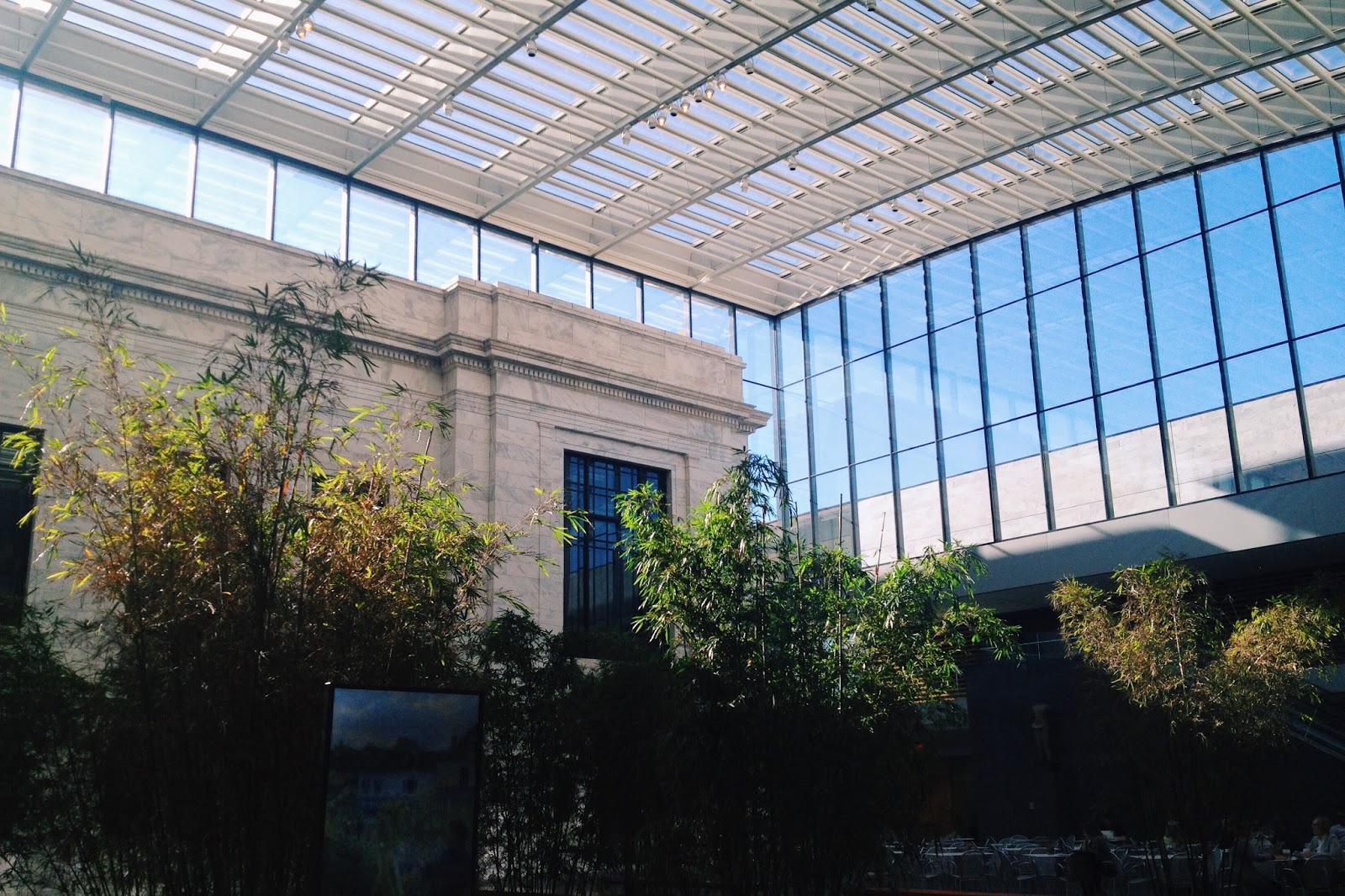
The atrium of the Cleveland Museum of Art

Sunday, January 3, 2016

Gradual exit


A dramatization of my apartment, courtesy of Animal Planet

I'm approaching my final semester in college, and my final semester in the wretched little treehouse that I have called home for the past three years.

It's been a hard year for me, but something that unexpectedly troubled me was how unhappy and uncomfortable I was in my apartment. It's always been cluttered, it's always been small, but only now did I realize how much dirtier and disorganized it's become this past semester. The general deterioration of the apartment, along with the increased quantity of accumulated stuff has become oppressive and depressive. I use such strong language because the realization of this truth was so startling. Indeed, dissatisfaction with the space I live in seriously affected my general outlook and wellbeing.

It seems so obvious now that I wish I'd been less complacent about it before.

Given that I only have a few months left there, I think it's high time I jumped whole-heartedly on the decluttering bandwagon, but with the distinct goal of preparing to move out. Also, I realize how uncertain my future is, but know for a fact that I'll be moving back in with my parents immediately after graduation, regardless of what my plans eventually become. As cluttered and cramped as I feel my space in my apartment is, my space at home is practically empty. I don't own many things, and the things I do own went with me to college, and now sit in my small apartment. Over the years, certainly I've accumulated belongings, some of them more used than others, and many of them used not at all and simply wasting space.

My goal is to sort through my space/things in my apartment and make the move-out process slow and steady. I plan on visiting home once a month (I'm local), and relocating some of my belongings. In this process, I will toss/recycle/donate as much as I can, and reorganize what will remain in my apartment so I can utilize the space more effectively. A general goal that I have is for each item in my possession to have its specific, designated location. I suffer from some laziness that makes me leave things lying about haphazardly: now is the time to combat it.

I haven't read Marie Kondo's manifesto, but I feel like I have a good idea what it says. If I deep clean area by area, then perhaps my feelings of being trapped by stuff will  gradually go away. Here's to a more organized and content 2016.