Showing posts with label MD cycle 2016. Show all posts

Sunday, February 21, 2016

Philadelphia Museum of Art

In December, I went to Philadelphia to my last medical school interview at a nice SOM that I will not attend. It was pouring rain when I arrived, when I interviewed, and when I left, and thus I spent most of Interview Eve in the Philadelphia Museum of Art or on public transit, which, by the way, is extremely well-organized and charmingly old-fashioned.

Though I did eventually see the Liberty Bell and walk by Independence Hall, it was so dark and rainy that I accomplished no real sightseeing. If anything, the views from the train and the window of my Uber to the airport were more successful at stirring up the whirlwind feelings of being in a new city. Also, walking around the campus during the interview in the pouring rain in a suit was downright miserable.

Also, I learned that the Schuylkill River is approximately pronounced "Scoogle" or "Scookle."

All this is to say that due to inclement weather, all I really have to show for my trip to Philly are some photos I took in the museum, which was one of the most splendid and awe-inspiring collections I've ever seen. In spite of my disappointment of not being able to see the city, I was more than satisfied with what I saw in the PMA.


Left: Right Shoulder, Arm, and Hand; Front of Male Torso;Right Side of Head; Right Foot; Right Thigh, Leg, and Foot; Left Knee; Front of Neck and Part of Shoulder

Right: detail of Right Side of Head

All by Thomas Eakins


The Gross Clinic -- 1875, Thomas Eakins


The Agnew Clinic -- 1889, Thomas Eakins


Sunflowers -- 1888, Vincent van Gogh


The Abduction of Europa - 1727, Noël-Nicolas Coypel


The Burning of the Houses of Lords and Commons - 1835, J.M.W. Turner

I have always loved Turner's paintings, which have such a distinctive dynamic, yet ethereal, style to them. I didn't know much about the collection at the PMA so seeing this in the gallery was a pleasant surprise. In addition to the photos here, there was a special exhibit on the Prometheus myth, showcasing masterpieces by Rubens, Michelangelo, and Titian that absolutely stunned me. Unfortunately, no photos allowed, but the museum site has plenty of information.

The two Eakins paintings shown above were housed in the same gallery across from one another with a bench in between. How can I describe the feeling of being a lowly medical school interviewee in a new city, staring at two significant paintings in medical history? There are many, many analyses of The Gross Clinic and The Agnew Clinic separately and together, and I could not try to look for meaning that others have missed.

I tried to edit the photos to recreate how I remember the paintings to look like. In the dark red gallery, the dark and cool-toned Dr. Gross presides like a wise, stately angel over his somber operating theater. Dr. Agnew's lecture is light and warm, and look how the standard of professional medical care has transformed.

So, I sat in that gallery for at least fifteen minutes, looking back and forth between Drs. Gross and Agnew. From childhood, I have always wanted to be a surgeon, and since then, I have worked ever closer to that dream. At the time, I had not been accepted into medical school, so seeing these paintings was more desperately aspirational than resolutely motivational, but you can imagine how I felt.

Anyhow, I hope I can put together a post about other art on the interview trail, but the recent death of my phone may make that difficult. I leave you with some readings about the Eakins paintings: [0] [1] [2] [3] [4] [5]

Tuesday, February 9, 2016

Letters of recommendation | Applying MD


Old-fashioned paper envelopes because a stock image of a PDF would not be that exciting.

There is a veritable bounty of resources, threads, and guides about getting good LORs, but I ran into a few issues early this cycle that have caused me a bit more stress than needed. Many of these written (and anecdotal) resources are ambiguous and/or not helpful in answering my specific questions.

This post will not tell you how to build strong relationships with letter-writers, and it (obviously) draws heavily from my personal experiences. However, my questions may well be ones that you are wondering about as well.

Letters that I used:

1 PI letter: professor, mechanical engineering, did not take a class with
2 engineering faculty letters: mechanical engineering professor (course classified as Physics on AMCAS), bioengineering lecturer (course classified as Biology on AMCAS)
1 biology faculty letter: general biology (huge class) lab TA, cosigned by the professor, whom I have never spoken to in person
1 humanities professor letter: upper division class
1 clinic volunteering letter

With the exception of the biology letter, I regularly went to office hours and built up good relationships with these faculty members. They knew me well and were pretty eager to write a letter on my behalf (except for the mechanical engineering professor, who erroneously thought that only the only faculty that should write LORs for med school were PI's, and thought I was choosing him over his colleague whose lab I did work in...but explanation brought him around).

Why did I ask for that biology letter, then?

Engineering majors will probably know the answer, and I'll address it with the biggest LOR question I've had this cycle:

1. Most medical schools require letters from faculty in the SCIENCES. Do letters written by faculty in engineering with whom you've taken engineering classes count towards this requirement?

Put simply: does engineering count as science?

The short answer: YES. However, the internet is frustratingly vague on this front, and anecdotal evidence was not particularly helpful, especially since most of my premed friends were not engineering majors. While it seems absurd that engineering would not be considered 'science,' this presumption is furthered by the AMCAS course classification table that outlines engineering disciplines as falling outside of BCPM.

As an aside, I successfully assigned the vast majority of my bioengineering and mechanical engineering classes as BCPM (B and P), and a materials science course as C. However, I did assign my independent research class and a MATLAB class as 'Engineering.'

The caveat to this letters of recommendation thing is that this post is still anecdotal evidence at best, and I strongly encourage anyone who is concerned about their letters not fulfilling requirements to verify their validity on their own. After you are verified by AMCAS (hopefully you will submit early) or even earlier, call each school you are applying to and get the answer from the admissions office.

I'm not joking. As it turned out, almost every single school accepted my preferred four letters (PI, engineering faculty, and clinic), and I only used the weak biology letter and humanities one two or three times.

Working backwards in time, here is another question I grappled with:

2. When should my letters of recommendation be in?

A side questions: is asking for a letter from a spring semester junior year professor (if applying in the summer after junior year) cutting it close?

Letters of recommendation are needed to be 'complete' at a medical school. Though they are mentioned on AMCAS and will be sent to schools through AMCAS, they are not 'due' when you submit your primary. Since you don’t want your application to be unnecessarily delayed, you want your LORs uploaded onto AMCAS well before you plan on submitting any secondaries, just to be safe.

Because I was unclear on this (a very popular internet premed resource for the UC system spread information that LORs should be ready at the primary stage) I had my writers submit their letters to the Career Center letter service by the first week of June. Biology letter blew this 'deadline,' but I didn't use that letter much anyways. If you want to submit secondaries right as they come out (maybe you submitted AMCAS early, and prewrote like I did not), mid-June is a good ball-park deadline. Virtues of being early in this process aside, 4-6 weeks is a good amount of time to give someone to write a letter. Because UC Berkeley ends the semester in early May, I was able to get a letter from someone I took a class with in the spring semester after regularly attending his office hours over the prior few months.

And going farther back in time:

3. Who should I ask for letters of recommendation and when?

Who: a faculty member (professor or lecturer) who knows you well and can vouch for your intelligence and diligence in their class. Hopefully, you've gone to their office hours and asked insightful questions, and are able to have conversations with them about relevant topics not explicitly covered in the lecture material

When: regardless of if you take their class, ask for a letter after you've developed good rapport with them. Ask them around finals week or shortly before so you'll be fresh in their mind, even if it will be another year when you apply. The spring before your application summer, ask them formally for a letter of recommendation, and get on them to stick to deadlines.

Professors do this sort of thing all the time, and part of their job is to help students of the university achieve their post-graduate goals. However, this certainly does not mean you are entitled to a letter, and learn how to receive rejection or reluctance with grace.

As for how to get the letters to AMCAS, Interfolio is a good idea. I personally used the Career Center letter service, and avoided some (anecdotal) problems of delays and lost letters by doing everything electronically and early. I don't regret setting an early June deadline, and fortunately, I did not have any trouble with my letters this cycle. I've left quite a bit out, but these were just the points that I particularly wanted clarification on when I was at this point in the application cycle.

However, I strongly recommend an external service like Interfolio simply because I would like to have certain access to those documents in case I had to reapply.

4. Closing thoughts

I may have made a mistake in some of my faculty letters, but that comes from the fact that I was a wimp and seldom pushed myself out of my comfort zone to really get to know professors. I'm sure that one of my engineering letters, and most certainly the biolog letters were weak. I also wish that I had gotten a letter from my Spanish teacher as my humanities letter since foreign languages are high-effort classes that significantly show your participation and the way you handle unfamiliar material.

I wish I'd used Interfolio, but no harm, no foul.

Go to office hours.

Wednesday, January 20, 2016

Finally pre-med


A late afternoon picture of Cleveland's Little Italy. Very little relevance to the post below, actually

Recently, I was admitted to Boston University School of Medicine's class of 2020. I got the news in Safeway,  wept in public, and am still riding the bliss of knowing that I do have a future in medicine, that I will become a doctor. So ended my agony of the cycle, washed away all plans of gap year jobs and reapplication, and undermined many of the self-loathing/doubting/destructive thoughts that have been lurking in my brain these past few weeks.

More importantly, I realize that I have to shift my way of thinking of myself and what my work must be for. For the last 3.5 years, I have predominantly seen myself as a college student working towards becoming a medical school applicant. Now, it is clear that I must reevaluate myself, and redefine myself: I am a future medical student, and a future doctor. My goal now must be what I had always wanted it to be. I must strive to become a good person, a good physician, and learn to practice medicine.

The title of this post references my discomfort with the term pre-med, which I've written about before. In short, I've never liked identifying myself as such, since there is so much uncertainty in college anyhow, no matter how resolutely I believed I wanted to become a doctor. Also, early on in college, I felt alienated from other bioengineering majors for feeling strongly about applying to medical school. Until recently, when I learned that a significant portion of graduating seniors pursue consulting jobs (Deloitte, Accenture, etc), I felt like an inferior black sheep of the BioE flock because I one of those losers that wasn't going to become an engineer and use her degree.

The shame of being an engineering quitter is unreasonable. It's actually completely stupid since I've known since childhood that I wanted to be a doctor. Berkeley engineering has taught me valuable lessons, taught me how to think critically, design methodically, and solve problems logically, but it was ultimately a means to an end. My research lab has been a home away from home, my graduate student mentor become a general life coach, and my fellow undergrad worker bee a close friend. For a long time, I illogically felt unwelcome in BioE. Let me add, too, that some of the other pre-med BioE people participate in many more engineering-related things than I do.

I digress. The point of the title is that now, only now that I've gotten into med school do I feel comfortable with that descriptor. I am pre-med: for the next few months, I will be a person in the prologue of my medical career. In August, I will matriculate. It's just a stupid phrase. It's silly that I should feel the way that I do, but I'm understanding that now. In the next few months, I need to work on myself, my self-esteem and confidence, and my emotional health. I need to work on broadening my understanding of the health care system in this country, and read and write as much as possible.

Before I end this navel-gazing post, I must add that I am thrilled to have been admitted to BUSM, and to potentially live in BOSTON for the next 4 years. Between elation at attending one of my favorite schools I interviewed at and the staggering anxiety at the amount of information, skills, and responsibility that I must take up during med school...I'm kind of drained.

Sunday, January 17, 2016

Cleveland


In early November, I interviewed at the two MD programs at Case Western Reserve University: the 4 year University Track and the 5 year College Track (aka Cleveland Clinic Lerner College of Medicine). I stalled on posting these pictures since there were all holy shit autumn leaves that were very similar, but all too dear for me to delete. These pictures, with the exception of these early ones of the city and a few at the end, were all taken at the Lakeview Cemetery. For the sake of aesthetics, the text won't necessarily describe the closest photos.


Cleveland in early November was a ridiculous blast of colors. Flying in over the drab Lake Erie and having my first glimpse of the state of Ohio be city + near confluent mass of red/orange/gold deciduous trees was absolutely jawdropping.


I took a train eastbound from Puritas Station to University Circle at around sunset. Cleveland literally looked like it was on fire. These are my favorite pictures from my trip since they capture the incredible autumn foliage and also the remnants of infrastructure and industry that formed my preconceptions of Cleveland. Would you believe me if I said I hardly edited these pictures?

Left: my CWRU student host's darling cat
Right: a basic boots + autumn leaves picture

Because I had interviews on Monday and Wednesday, I stayed in Cleveland for three days and three nights. On Monday night, I took a bus from the Cleveland Clinic to Cleveland Heights, the most picture perfect autumnal suburb I had ever seen. Since it was shortly after Halloween, walking at night in this part of Cleveland was spooky rather than scary, and actually pretty enjoyable. I have few pictures of Cleveland Heights, but imagine many brick houses, trees and their leaves everywhere, and curvy streets. My student host told me it was designed to reduce deer deaths by car. I don't know how true that is, but a buck did jump across my path during my nighttime walk.


On Tuesday, I explored Cleveland Heights, Little Italy, University Circle, and Case campus. My host dropped me off at the medical school, and I promptly went east towards the cemetery. Nothing quite like a stroll in a historical graveyard among autumn leaves to reflect on my own mortality, dwell on my abysmal performance at my CCLCM interview, and worry about CWRU on Wednesday.


I got to see the chapel, Rockefeller's memorial site, the mausoleum, and Hoover's monument.


After that, I went through Little Italy, University Circle, and Case campus. I had coffee and a bagel at a cute coffee house, then spent the vast majority of my day at the Cleveland Museum of Art. I'm far from an art connoisseur, but I enjoyed its collections, and was right at the level of Cantor, the free museum at Stanford. Because the CMA was free, I ended up going back to it a few times during the day.


There was also a little museum of medical history, with a special exhibit on childbirth, on Case campus. The same building had a beautiful, old-fashioned library, luxuriously decorated with oil paintings, antique medical equipment, and antique furniture. It reminded me of the Morrison Library at Cal, but much larger.


Creepy stumps


I did not see much of the city beyond the Cleveland Clinic itself, Case Western campus, Little Italy, and Cleveland Heights. I've deliberately left out most of the medicine-related details, which are the details that an applicant might find useful, but I have relatively little to say about either CCLCM or CWRU that is not mentioned on MSAR, the program websites, etc.


The Coffee House at University Circle: cute little place for a morning coffee and afternoon bagel and nap

That's all I have to say about Cleveland.


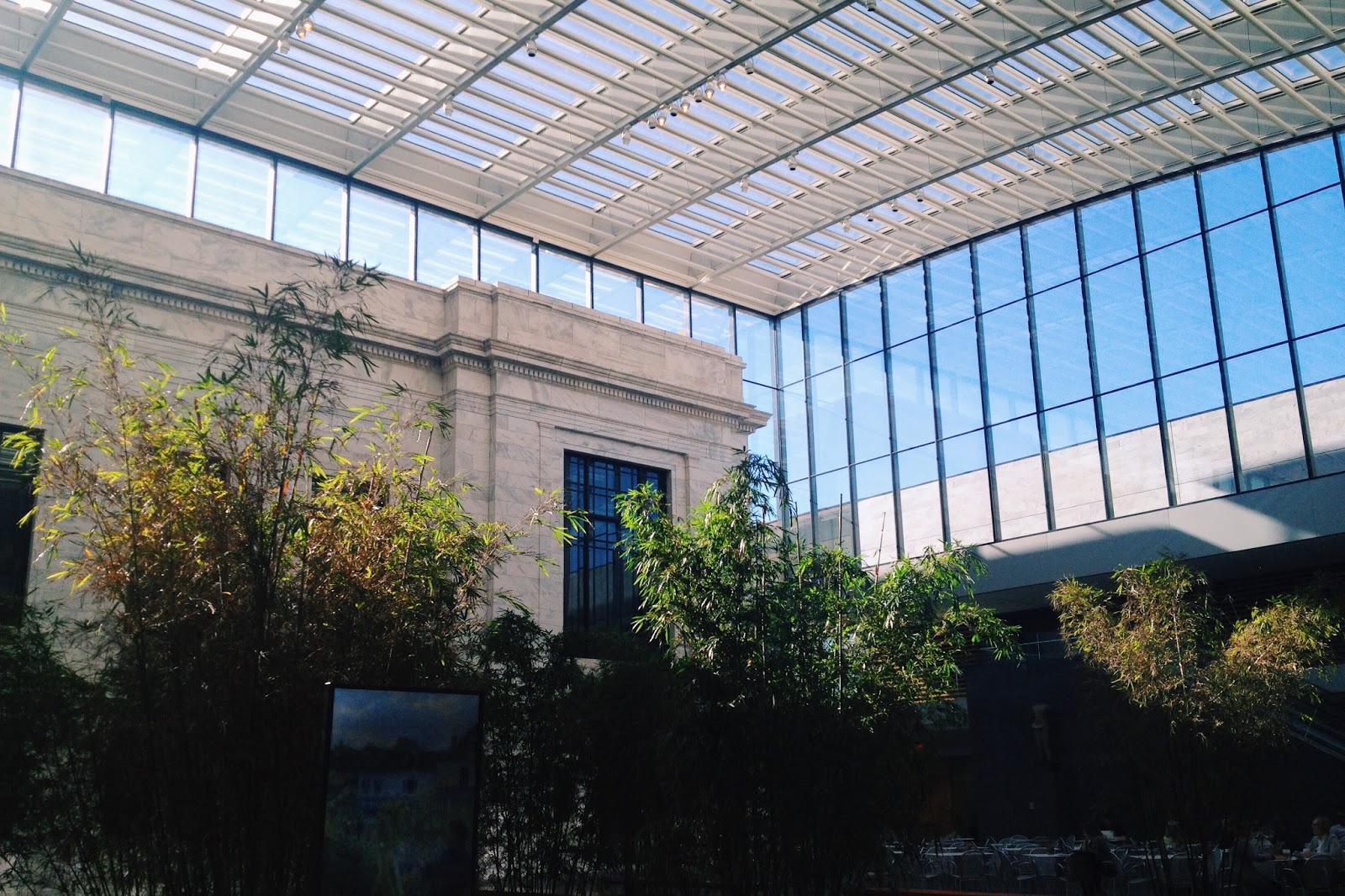
The atrium of the Cleveland Museum of Art

Tuesday, December 22, 2015

Wish I could find a book to live in


That's some wishful thinking, but for the past few weeks, I've been trying to do just that. Amidst my disappointing MD application cycle and obstacles in my personal and academic life, I've felt helpless and lost. I've more or less accepted that I'll be reapplying to med school either next year or the year after, which is a huge blow to my self-esteem and my general perspective. I won't belabor the point, but it's easy for me to say with great confidence that I've been on a steady decline in emotional health since July of this year.

No wonder, then, that I blew through the entire Inheritance Cycle during Thanksgiving break (I should have prepared more for the interview that occurred right after, but at the time, I thought I'd done enough), then began reading the Temeraire series by Naomi Novik during finals week. I have always favored fantasy novels, but only recently have I really acknowledged them as escapism. Dense worldbuilding, and plot-driven (not to say that the characters aren't wonderfully engaging and developed) fantasy novels are the dazzling distractions against my melancholy, and bleak future.

I've been talking my sister's ear off about this series since winter break started, and though I'm only partway through the fifth book Victory of Eagles, I have half a mind to just start over from the beginning of the series for a second round. Though some plot points can seem contrived or silly, the general effect is a good one. How can I put it? Temeraire was made to be adapted into screen. Some of the supporting cast is bland and flat, but the dialogue is always engaging and drives the plot along.

Anyhow, the tl;dr version is that dragon-based fantasy novels are distracting me from the responsibilities and misery of my depressing future as a med school reapplicant.

--

Another thing, then. The title of this post draws from "Look what they've done to my song, Ma" by Melanie Safka, covered by Miley Cyrus and Melanie, which has become surprisingly (and painfully) relevant throughout this semester.

Indeed, I've felt as if my brain has been picked apart, then put back in all the wrong way just in time for me to bumble through my interviews. More importantly, I've become increasingly reliant upon/emotionally supported by my family, especially my Mom throughout this year.

Saturday, November 28, 2015

Boston, Part II

First order of business: I'm going back on my promise about writing SOM interview reports. I've learned that I really, really dwell on them and it does me no good to agonize over my performance. Less work and less misery for me. Instead, I'll just be posting pretty (hopefully) pictures of my travels.


After my interview at Boston University, I took an Uber back to the BU undergrad campus with some other interviewees and took a quick break at my friend's apartment. After I charged up my phone and changed out of my suit, I packed up my stuff and took the T to Boston Common. As a note, I didn't know where to pay fare (selective ignorance, maybe) and ended up with a free ride. Apologies to the City of Boston.

Anyhow, the T spat me out in what looked like the theatre district. I walked around Boston Common, thinking about how in ye olde days I may have taken my livestock there or watched someone hang for a crime. I thought about seeing some more historical sites, but I had a flight to catch. This was a cool dome, though.


Then to the public garden. My hope was to walk through Boston Common and the garden, then down Newbury Street and then to the Heynes Convention Center to catch the shuttle to the airport. Unfortunately, I was walking west and the sun made pictures a bit tough. The bright patches of grass were blinding to look at, maybe helped by my familiarity with Californian drought conditions.


Another view of the garden.


I think I was trying to get a picture of the willow, since it's not often that I see them.


Ducks. We get more Canadian geese in CA.


A cool bridge. It would be nice to go boating here in the spring and summer.
General Washington!


My walk down Newbury St was punctuated by gawking at architecture. I forgot what church this is, but it was certainly a marvel.


I have no idea what this building is.


A Chinese tourist saw my suitcase and asked me if I were a tourist as well. He was taking pictures of buildings and asked if I could take one of him standing in front of some famous church. I think this church was the one he was looking for, and we parted ways after I told him I was on my way to the airport.


Upon my buddy's suggestion, I went to Emack & Bolio's for ice cream. This one was salted caramel and chocolate-covered pretzels, which was pretty delicious. I'm no foodie, but it seemed like a good treat at the end of the interview day.

Some final thoughts: I could see myself living in Boston for four years and more. That said, I saw Back Bay, MIT, and Boston Common on my trip, and a bit of South End and the BUSM and BMC area. Perhaps that isn't representative of Boston, but I enjoyed my trip. Since I didn't get to see any historical sites or museums, I know I must return, if only for vacation one day. If anything, I would go back just to walk all day through Back Bay, around the Freedom Trail, etc.

I hear back from BUSM in early January, so here's hoping.

UPDATE: accepted to BUSM with Dean's Scholarship! I'm going to be a doctor!

Friday, October 16, 2015

Boston, Part I

I'd never been to Boston. I'm sure I only saw a small subsection of this great city, but I was enchanted by the parts through which I walked. I spent two days in the city, around eight hours of which were spent on an interview, and did not get to see nearly enough of it.


I took a shuttle from Logan International Airport to the Hynes Convention Center in Back Bay. Observations: the trees are different, the buildings are old, and there sure are a lot of bricks. My plan of the day was to get some coffee, get some food, and sit around by the Charles River before walking to MIT to meet a friend, JC. This route took me through Back Bay, which was a serious wonderland of the most picture perfect Victorian brownstones.


Back Bay did not seem real. Of course, probably not representative of all of Boston, but still, it was a wonder to walk through. I was dragging my suitcase (very small, very light) over old road and brick while tired and dehydrated to the point of headache, but I felt pretty motivated by all the beautiful architecture around me.


Back Bay, and all the rest of Boston that I saw, was extremely walkable. If I'd walked that same distance (Hynes Convention Center to MIT: 1.2 miles, according to Google Maps) in Berkeley in my condition, I would be in for a bad time. Boston is flat, Berkeley is not. Anyways...


Crossed the Charles River by way of the Harvard Bridge. Smoot markings were pretty funny to look at. It was damn windy here, but still a great view.


Made it to MIT in one piece, took a nap in the lobby of the Marriott while waiting for JC, who took me on a campus tour. Interesting fact: MIT's buildings are connected to one another! Perfect for avoiding the winter. The computer science building was very quirky and busy, and my favorite since that was where JC bought me a Naked juice, which revived me from my exhaustion. I had wanted to see the shipbuilding exhibit and it was cute, but underwhelming. Original plans were to visit the MIT museum and Harvard, but there was no way I was walking that far.


A gingerbread castle at MIT. JC informed me that it was a dorm.


After touring MIT, I walked back across the Harvard Bridge and west through more of Back Bay to get to Boston University to meet another friend, RN. On my way, I passed by the famous Fenway Park. I took a break to eat some of the baguette and salami I bought in the morning from Trader Joe's.


I sat around at RN's apartment, and she took me around BU campus, which is a narrow strip between 1-2 miles long. We walked the length of it, took the shuttle back to her apartment, where we talked and I ate more of my provisions and napped. It was good to catch up with old friends in a new (for me) city, and though my plans for being touristy and rambling all over Boston were trumped by my lack of energy, I had a wonderful day.

After my nap and dinner (provisions yet again), we went to Whole Foods for her dinner and to find a gift for my med student overnight host (some potted flowers). I took the BU shuttle down to the medical campus, and that was a day.


Wednesday, July 15, 2015

Burnout


This summer, it seems I've had a cataclysmic weekend at every turn. I'll face a few days of relative calm, and then BAM disaster. Usually, it has to do with the clinic.

Here's something to think about: this past Friday + weekend, I have spent 18 hours at the clinic. No rounding up: 18 hours over three days. I went to two parties over those three days, which were seriously fun, but 18 hours is ridiculous. As a note, though I am a coordinator (read: an administrator on good days, an autocrat on bad days), I am still a volunteer. If I'd been paid at my high school part-time wage, I'd be pushing $200, which is about two secondary applications for medical schools.

All that was furthered by personnel issues and the fact that I have taken on a behemoth project to implement (read: force) my section to use our electronic medical records system correctly. I'm not entirely sure how this happened, but sometime in the winter, our section (either I decreed it or somebody pushed it onto us) became the one to pioneer EMR. Of course, all this is good fodder secondaries because it shows leadership and struggle and this and that, but good God is it a headache.

I am told that this is usually the responsibility of an IT team. Though I am sure their timeline is much shorter, I carry the burden for an agonizing amount of time. But what about delegation? Don't make me laugh. Delegating in a volunteer organization with a collective structure is tough shit. People are lazier here. People don't need to care because they don't have accountability. Furthermore, the oversight and accountability administrator is me. More responsibilities, more headaches.

Why the hell do I do this to myself? God complex? Masochism? Not sure.

As this lovely picture shows, this weekend was a mess of clinic obligations, personal deadlines for secondaries, and social engagements. I didn't really sleep much, and towards the end of Saturday, it was already pretty clear that I was in foul weather again.

The Han Solo to my Luke Skywalker when I was a wee trainee (and he was a coordinator) always warned me about burnout. My parents and boyfriend do it all the time, but when it comes from my peers at the clinic who were in my same training cohort and have watched me grow into this responsibility say so, I feel it. All weekend, I was griping about not being able to finish my Duke secondary on time, not being happy with anything I wrote; I was really complaining about being overextended.

I think I burn out quite often, and just after I submitted my Duke app today (!!!), I felt rejuvenated. Fair enough, but I still have a marathon ahead. I want to really change the clinic, and what sort of change is truly good enough if someone didn't have to get tired over it?

Tuesday, July 7, 2015

Summer refresher

I'm just beginning properly writing my secondaries for MD applications now, and nervously awaiting the downpour of emails that will surely (hopefully) come after the holiday weekend. However, I won't be writing about that here.

In the past few weeks, I've begun noticing some less-desirable attributes about myself and my surroundings. Particularly, I am annoyed/disgusted by the state of my apartment, and how generally, I tend to clutter up my work and living areas. Not to say I'm a hoarder, but I surely don't need to hold onto all my past midterms. Same thing goes for the various small things hanging around my desk. I'm at home right now, but when I return to my apartment tomorrow, I'll have to do a very thorough cleaning.

More seriously, I am inattentive to the cleanliness of our apartment. One roommate is fastidious and tends to keep to her own room, but another roommate and I have neglected to keep up the tidiness of our space. We left the apartment in a pretty bad state when the semester ended, and I still haven't gone through and cleaned out the fridge, which surely has some kinds of rotten vegetables and mold in it. I'm being honest here.

Dirty dishes, dirty floors as well. I try to clean around the apartment more often this summer, since clutter and dirt stress me out, but I need to make it more of a habit. In general, I have a lot of things hanging around the apartment that I should just toss or sell, and once August rolls around, I'll make a serious effort to sell off my old textbooks. Of course, that's not the most egregious contributor to the mess, but that's an actionable goal.

Next, I'm unsatisfied with my diet, exercise habits (or lack thereof), and schedule. Towards the end of the semester, I was less diligent with cooking, and ended up throwing together some meager and unhealthy meals. Lately, my boyfriend and I have been making a greater effort to cook more and actually enjoy food. I may have mentioned this before, but last semester, I both looked forward to and dreaded mealtimes: I would not be hungry, but then again, nothing I made tasted good. He's recently demonstrated his superior cooking skills, so here's hoping I learn something from him.

In the same vein, I want to start going to the gym. Last semester, I was flattened by boxing tryouts, and swore that I would work out to get in better shape. I was hoping to be actually put into an intercollegiate fight this year, but in general, I should increase my level of fitness. My goal is to run < 7:30 mile, increase my flexibility, and try lifting. More broadly, I'd like to get in the habit of exercising regularly. I do have a phobia of looking stupid in front of people at the gym, but if it's my boyfriend telling me I'm doing something wrong/have bad form/some other gym critique, I'll be more confident trying.

And finally, I need to go all-in for secondaries. I want to allocate more of my free time to fiction writing and seriously cut down on dead internet time. Wake up earlier, exercise regularly, eat healthier, drink more water, go on more hikes, write more articulate and intelligent secondaries, hang out more with old friends, etc, etc.

That's all for now.

*** Not really. I changed a tag from MD cycle 2015 to MD cycle 2016. This is because I plan on matriculating in 2016.