Wednesday, July 6, 2016

National Gallery of Art | Washington, DC part 2

So, this post is heavy on the images and light on the words. I love art, but I guess I'm a bit basic in what art I really admire. I'm no good at art criticism in any capacity, but I have a lot of thoughts on my favorite art movements.


Green River Cliffs, Wyoming - Thomas Moran - 1881

Let's just get this out of the way: the Hudson River School is my opinion of ultimate landscape art. I occasionally paint -- I copy existing paintings onto wood board with acrylics, that is -- and I always go back to Hudson River School paintings. I edit my own crappy iPhone landscape photos to look more HRS and follow the spiritual successors of that great American art movement on Instagram.


El Rio de Luz - Frederic Edwin Church - 1877

The Hudson River School was late-19th century art movement rooted in Romanticism-inspired landscape, begun in the Hudson River Valley of New York state. It spread to New England, the American West, and was essentially the aesthetic ancestor of much art and imagery produced of the American wilderness thereafter.


Tamaca Palms - Frederic Edwin Church - 1854

Not all of the art in this post is HRS by any means, but I've tried to front-load them so you can get a sense of the style. It's not subtle at all. It's brash and bold and makes me -- figuratively speaking -- want to start a USA! USA! chant in the middle of a museum.


Buffalo Trail: the Impending Storm - Albert Bierstadt - 1869

Wikiart is another good place to look at more HRS art, and you'll quickly find that some of the works depict places in the world of not-America. That's okay, that's okay.


Niagara - Frederic Edwin Church - 1857

Here is my opinion on the significance of the Hudson River School. I wrote a short essay about it for a class last fall, but I have forgotten the sources and will just summarize briefly here. In the early "modern" era -- post-Enlightenment -- western society became disenchanted with nature, a previously vital and powerful, unpredictable and dangerous place where gods did their work. The march towards a worldview of controlling nature came on the heels of many Greek philosophers, the Abrahamic religions, the Scientific Revolution, and the Enlightenment. In the mid-late 1800s, there was a surge of art and literature -- Emerson and Thoreau are the obvious answers -- to reclaim enchantment with nature.


The Last of the Buffalo - Albert Bierstadt - 1888

The grandeur of nature conveyed by Romantic art, the turbo-charged grandeur of American nature conveyed by the HRS, is a reintroduction of God into nature, but in an anthropocentric, and even egocentric way. It's a glorification of the magnificence of the "untouched" wilderness, the drama of God in the clouds/intense sunlight/mountains/forests/high-contrast vivid colors/etc. If you're cringing, you can think of it as another example of ham-fisted American imperialism. These paintings were, after all, used as propaganda for westward movement and vacationing.


Mount Corcoran - Albert Bierstadt - 1877

That's all I'll say about HRS. To get the same feel of the American wild via text, I recommend John Muir.

The National Gallery of Art has a great collection of these paintings, and I do love them.


Natural Arch at Capri - William Stanley Haseltine - 1871


Ruins of the Parthenon - Sanford Robinson Gifford - 1880


The Voyage of Life - Thomas Cole - 1842

Thomas Cole was a founder of the HRS, and his work is pretty much amazing all around. Romanticism galore and allegories here and there. Analyses of his landscape works will tell a lot about that movement, certainly better than I can here.


Left: Portrait of George Washington - Rembrandt Peale - 1795-1823
Right: Washington before Yorktown - Rembrandt Peale - 1824


Indian Gallery - George Catlin


Joshua Commanding the Sun to Stand Still upon Gibeon - John Martin - 1860


Left: The Japanese Footbridge - Claude Monet - 1899
Right: an atrium in the National Gallery


The Edge of the Forest at Les Monts-Girard, Fontainebleau - Narcisse Diaz de la Peña - 1868


Left: Madonna and Child with Angels - Orcagna and Jacopo di Cione - before 1370
Right: The Adoration of the Magi - Fra Angelico and Fra Filippo Lippi - c. 1440/1460


Left: Ginevra de' Benci, obverse - Leonardo da Vinci - c. 1474/1478
Right: its reverse


Landscape with the Flight into Egypt - Roelandt Savery - 1624


Saint George and the Dragon - Sodoma - 1518

As a prelude to my Germany posts, I really like dragon and serpent imagery. Just a warning for many dragon pictures to come.


Left: Flowers in a Basket and a Vase - Jan Brueghel the Elder - 1615
Right: Still Life with Artichokes and a Parrot - Italian 17th century


Left: Still Life with Flowers and Fruit - Jan van Huysum - 1715
Right: The Larder - Antonio Maria Vassallo - c. 1650/1660


Left: The Hydrogen Man - Leonard Baskin - 1954
Right: Booster - Robert Rauschenberg - 1967


Riders of the Apocalypse - Benton Murdoch Spruance - 1943

Just to show that I'm not entirely about glory, glory, Hallelujah USA, this is one of my clear favorites from the museum. I feel a little silly, but it gives a very Guernica-like feeling, but with the aggressors being American planes (check out the stars on the fuselage).

Anyhow, the next post is very aircraft-heavy. I like planes.

Thursday, June 30, 2016

Smithsonian National Museum of Natural History | Washington, DC part 1


Welcome to the first of my three-part recap of my trip to Washington. It's an image-heavy post with very little accompanying, relevant info to the specific images, which I do apologize for. Really, consider this a post as my thoughts on visiting DC in general accompanied by photos from the nation's treasure chest/cabinet of curiosities/attic. Founded in 1846, the Smithsonian Institute serves that purpose, and as a vehicle for research in science, history, art, "for the increase and diffusion of knowledge."


Also, a DC trip to see the landmarks, memorials, federal buildings, and National Mall (where most of the museums are clustered) is extremely obvious and unoriginal. It's an itinerary that is extremely popular among middle school tour groups, which flood the capital in the summertime. I have tried my damnedest to keep the throngs of youths out of these pictures, but just know that the museums are large, crowded, and loud.


The Natural History and American History museums are most susceptible to this, but do quiet down considerably in the afternoon. I visited DC when I was in fourth grade, and it's hard to communicate the overwhelming sense of wonder at everything contained in the museums, all the information and things to look at. I distinctly remember going through the Natural History museum with my mother for hours, getting lost among the exhibits and frantically tearing through the exhibit halls when the museum was closing. I've only really taken pictures of taxidermy and minerals, but the museum contains extensive exhibits about astronomy, geology, the oceans, mammalian evolution, human origins, insects, etc, etc.

I go as far to say that this museum did more to inspire me towards science at that age than any book I read, or lesson I had in school. While there certainly are many thorough placards to read and a lot of information to digest, this is a very kid-friendly place. Be careful not to step on any of them.


A whale hunt and the Lord of Three Realms

I went to DC with my mother, who was there for a conference and only had time to see this museum. We stayed around 2 hours before she had to go, after which I went to the American History museum. No pictures from there because it was even more packed, and very poorly lit. This museum is for everyone, and the most accessible form of American history is American Exceptionalism. Keep a critical view of American history, how we have affected international economics and geopolitics especially since WWII, and enjoy the exhibits. There is plenty to see even if the lighting is not good, and the vast exhibition halls on transportation (a dealership of ye olde automobiles, trains, etc) and the history of electricity (a hardware store of ye olde appliances, transformers, generators, batteries, etc) are not to be missed. The "food in America" room is also very interesting.

The "Price of Freedom: America at War" exhibit is pretty exhaustive in terms of information and artifacts, but extremely cramped and crowded and dark. It's a huge portion of the museum and I recommend seeing it in the afternoon when crowds are smaller.


I stopped by some other museums, but my favorite on the National Mall is the Natural History museum. Here are some samples of displays in the metals and minerals hall. There are dozens of these cases, and hundreds of samples to marvel at. Out of all the topic areas in this museum, the mining and metals section is the richest in information and things to look at.


I've tried to group these photos based on mineral type. These are both elbaite.

I decided to try out DC's Capital Bikeshare system on this trip, and it worked out reasonably well. Because I haven't been on a bike since high school, it was more challenging for me to get accustomed to riding with traffic (very busy) and searching for bike stations. DC is very flat, but streets are very wide and sometimes bike stations are empty. In any case, biking is far more comfortable than walking in DC, which is hotter, sunnier, and more humid than I'm used to.


Celestite, a chief source of Strontium in the world


IIRC, these are all sulfate-based rocks


Fluorite of all shapes, colors, and sizes. The funky cubes come from uneven degradation of the crystal, whose basic unit cell is an isometric cube. This means that the crystal grows in cubes and decays in cubes. Use some Wikipedia-fu to learn more about crystal structure.


More fluorite.


An assortment of blue crystals.


Arkansas quartz

I am certain you can find pictures of this most impressive quartz with some people standing in front of it. It's about five feet tall, I believe.


Lots of opals


Monster opal


This large piece of amethyst quartz is free to touch


Left: Hall sapphire necklace, platinum, with 195 carats of sapphires and 84 carats of diamonds
Right: Logan sapphire, 423 carats


Left: Post emerald necklace, Art Deco Cartier
Right: the Hope diamond, 45.52 carats

Look here for more info on mineral and gem specimens at the Natural History museum.

I'm trying to space out my picture-heavy posts from Washington and Germany, but really, I need some time to write about everything I saw and learned in Germany. My Germany posts will mostly go in chronological order, but there is room for non-linearity. Because I use this blog as a way to thoroughly document things that I witness/think about/etc, there will be lots of museums, history, and politics because those are things that interest me.

Saturday, June 11, 2016

On hiatus!


I just got back from a quick trip to Washington and took many pictures of our nation's great federal buildings and museums. I'm now on my way to Germany for the next three weeks, and will probably not post while I'm away. Goodbye for now!


Monday, June 6, 2016

Dwight D. Eisenhower | Extracts

For something completely different, I'm going to try my hand at sharing some extracts from a book I read last semester. Part of the purpose of this blog is to document my personal journey towards living a life that I am proud of and happy with, and part of that is working towards personal qualities that I admire in my heroes. So here I go.


The Allied invasion of France on the Normandy coast, the largest seaborne invasion in history, happened on June 6, 1944, or D-Day. Operation Overlord, as it's famously known, was instrumental in the liberation of western Europe from Nazi Germany, and was meticulously planned and executed by Supreme Allied Commander in Europe Dwight D. Eisenhower. Between the end of WWII and the '52 election, Ike held a number of very high offices and played a huge role in establishing post-war stability in Europe: Military Governor in Germany, Army Chief of Staff, president of Columbia University, and Supreme Commander of NATO.

The point of this post isn't to discuss the things Ike did. Rather, I'll share a segment adapted (numbered, instead of pure prose) from Paul Johnson's biography Eisenhower: A Life. This passage describes some "virtues" that General Fox Conner, an early mentor, saw in him:
  1. A clear, analytical intelligence
  2. The ability to articulate conclusions in excellent English
  3. He could get on well with anyone, especially hard cases -- which were common in an army where thrusting individualism was encouraged and promoted
  4. Adept at resolving differences and promoting solutions, especially compromises that worked
  5. Admirable persistence in pursuing reason in any military enterprise
  6. He concealed his strengths
  7. Ike was very hardworking, often for prolonged periods, yet he always appeared relaxed
  8. Consistent aims in life, quietly but vigorously followed
The effect of the Staff School was to confirm this combination, and especially to enable Ike to get his thoughts onto paper in a pellucid manner, something very rare in the U.S. Army, indeed in any army. It also implanted in Ike a keen realization of the connection between military power and industrial capacity, which became a salient part of his thinking about the future.
These are virtues that any person could benefit from, and I hope I can move in that direction. Regardless of your opinion on his actions and policies, I do think that the eight points above are qualities worth working towards.

I'll end the post here. See below for another passage, thoughts about the biography itself, and a bit from General Conner.

Sunday, June 5, 2016

Anonymous personal style (or, style thoughts at Anthropologie)

About a week ago, I had some time to kill in my hometown and went into Anthropologie, which is a favorite window shopping location with my friends and me. I must be honest: I like its whimsical, happy homemaker, slightly storybook aesthetic. My friends and I always spend some time in our hometown's Anthro when we visit, mostly looking at the homeware because the clothing, quite frankly, is not for the likes of us. I have no doubt that when I'm thirty and an attending, I'll find some dearly beloved frock there for leisure wear.

I've been thinking a lot more lately about personal style lately. It's been a very long time since I've purchased anything that wasn't black (this time last year, I bought a maroon blouse for med school interviews). In looking at Into-Mind's resources for refining personal style, I got to thinking that I occupy a very sartorially conservative,  almost featureless comfort zone of style. I'm not all that confident in my own clothes, and as I seek to build my personal and professional wardrobe over the next few years (and transition into adulthood, of course), I need to know myself better.

And before I keep rambling, the spoiler is that you can know yourself better by trying on clothes you have no intention of buying at all, and critique thoughtfully.

As a starting point, I present the following two dresses, both fast fashion items that I happen to be very fond of and wear often:


Though I haven't shared much of what I wear on this here blog, these dresses fly in the face of what I normally wear (though, they are both blue). I like the bold floral prints on both of them, though the left dress can be interpreted as 50-50 floral-psychadelic. What I know about myself from these two: I am comfortable wearing loud prints in an otherwise plain wardrobe, I favor knee-length and wide to full skirts, I like to show my arms and waist. They're both synthetic, but I'm prefer natural fibers in general.

With that in mind, I set off to play dress-up in Anthropologie. This is what I came up with:


Left:
  • Pros: great shape, cotton feels good, ample pockets
  • Cons: unlined bodice, pale plaid bores me to death, way too much fabric
Right:
  • Pros: trousers are nice and flowy
  • Cons: shapeless, thin synthetic fabric


  • Pros: linen, turmeric yellow looks okay on me?
  • Cons: unflattering cut, shapeless, makes me look like ye olde peasant wench in a bad way


  • Pros: paprika red + navy + cream work for me, loud and haphazard botanical pattern is great, linen, ye olde peasant wench in a good way
  • Cons: a ton of fabric and a generally shapeless cut, but I kind of like it
Long damn post, but here are my final thoughts about this exercise:
  1. I never put a lot of thought into what "season" I was, but from the colors I think look good on me and my own coloring, I'd say I'm an autumn.  I was surprised to see that scarlet + dark yellow + navy + cream (muted, warmer colors) look better on me than midnight blue + white + baby pink (clearer, cooler colors on my high-necked floral dress)
  2. Do not fear prints, especially if they are botanical.
  3. I picked these items to represent outfits I thought would be realistic and practical (shirt + trousers), different but still conservative (yellow dress and plaid dress), and a complete novelty (last dress). As it happens, the last one was an unexpected favorite that I could see myself wearing often. I suppose the lesson here is to just try on a lot of clothes before making a choice, and to be aware of unlikely stars
  4. I much prefer the feel of linen and cotton to synthetics, regardless of the cut
  5. Though I generally prefer a defined waist, I liked the cut of the last dress quite a bit. The plaid dress was weighed down by too much fabric everywhere (sleeves, waist bow, skirt), and generally looks more juvenile
  6. Reaffirmation of preferred dress: fuller skirt, mid-thigh to knee length, show arms, define waist
  7. Black leather sandals match everything


Thursday, May 26, 2016

Death of shoes

In memoriam: five pairs of shoes and a handbag that have served me well throughout college. And now their watch is ended. I'm trying to think critically about my belongings, lifestyle, and habits. Materialism, consumerism, my relationship with the things I own and use, etc, etc.


Clockwise from upper left: H & M black faux suede ankle boots, Converse, H & M brown faux leather brogues, black canvas martial arts shoes, Zigi Soho Fantasy brown leather boots

In cleaning out my apartment and moving out this week, I finally put to rest some shoes that I wore during college that have done their duty and died. The point of this post isn't really to shame myself for how shabby I wore these shoes, but rather to compile some lessons I've learned through them. I have seldom seen reviews for garments, shoes, or accessories well into their lifetime, much less at the end of them. I have learned a thing or two about shoe construction from these ones and I hope this post will be a cautionary tale for those who look to buy cheap shoes.

Before I get to the reviews, a note: I tend to wear one pair of shoes for weeks on end. This is unwise. There is value in letting shoes "rest" after each wear, and I am hoping to add another pair of shoes into my wardrobe come autumn so I can extend the lifespans of all those I own.


  • Black faux suede ankle boots from H & M - $20 (50% from $40) - Nov. 2013 to Dec. 2015 - these shoes were actually quite comfortable and good for walking up and down the hills of UC Berkeley campus. Problems occurred in the following order: discoloration of the material from black to a hideous purple, deformation of the metal toe pieces, heel wear, sole wear. During the autumn and winter, I wore this shoe about 75% of the time, even though it is not rainproof. I like the look of a black ankle boot, and see that this boot has design ancestry in the famous Dickers by Isabel Marant, but suede is not for me. I looked a long time for a replacement pair of black ankle boots, but never got around to buying them. In its final season, these boots were seriously affecting my gait and causing pain in my knees and thighs. I wore them far past their intended lifespan to the point where the heel was worn to metal nails and the sole at the ball of my foot worn to membrane thin.
  • Black Converse sneakers - ~$20 from Marshalls - May 2013 to Aug. 2013 - I wore Converse all through middle school and high school as my default shoe. I went through them one at a time, purchasing whatever dark color was available at a cut price from Marshalls. This was my first that was not of the classic design, but rather has a strange cuff around the ankle. These were monsters to walk in, and I limped through the summer before giving up. They lived on our apartment's shoe stand until I donated them today.
  • Black canvas martial arts shoes - $15? - Aug. 2013 to Dec. 2014 - I stopped wearing these when I stopped doing martial arts. One of these has a crack running across the sole, and though the local co-op residents had taken these up for fashionable, I wouldn't wear them outside of wushu practice. The Chinese person's gear is the white hipster's fashion statement against capitalist pigs, right? Anyways, they're trashed, but I'm bringing them with me to med school to wear during gross anatomy.


  • Brown faux leather brogues from H&M - $20 - May 2012 to Sep. 2012 - How H&M hurts me! The heel for one of these came clean off and was lost in a friend's car on my third wear of these. Like an idiot, I kept on wearing them in spite of discomfort, to the point where the rest of the shoe started coming apart. However, I did learn that I liked the look of non-boot leather shoes, though I still think the brogue or Oxford style is a bit too dandy for me.
  • Brow leather ankle boots from Zigi Soho - $50 (from Marshalls) - Sep. 2013 to Jan. 2015 - I really liked these shoes, but the heel just wore down too quickly and was coming to bits. This isn't so much a problem with the quality of the shoe, but for my tendency to wear them weeks and weeks on end without respite, to not look after them, and to be irresponsible. No close-ups of the heels, but I assure you they are very worn on the lateral edges. Funnily enough, we had a discussion about this in my orthopaedic biomechanics class in Fall 2014 during our homework about gait, and it turns out this wear pattern is normal. The photo is a bit overexposed, but the aging of the leather looked pretty nice, and the uppers looked good. Note that the stitching came apart on the toe. Overall, I like this style of boot and hope to find something similar in darker brown later on.
  • Brown faux leather satchel from H&M - $24 - Nov. 2011 to Dec. 2014 - I had this as my only handbag in this period and it has served me well. Since its retirement, I've used it as a storage place for important documents and items, but now it's time for it to go. It's a good size and shape, but began peeling not quite one year after I purchased it. I do want a satchel like this in the future, but of course in real leather and from a brand I feel comfortable throwing money at.
Long story short, I'm trashing all but the Converse (donated) and the wushu shoes. None of the others can be reasonably worn by another person at all, and I have foolishly tried to push them beyond their expiration to decrease cost per wear and avoid buying a replacement. Heel wear patterns are consistent with neutral, normal gait, but wearing overly deformed shoes will have negative consequences. Finally, there is no point in striving for a minimal shoe collection for the bragging rights of being minimal, when there is value in cycling between pairs.

My goal in medical school then is to wisely and deliberately grow my shoe collection by slowly incorporating high quality, reliable pieces. So: more wardrobe planning and more research. Now, I'm done.

Thursday, May 19, 2016

Berkeley Art Museum and Pacific Film Archive

I missed out on visiting the original before it was torn down (on Bancroft Ave) and didn't get around to visiting the newly constructed BAM/PFA when it first opened. I regret not taking advantage of it sooner, as admission is free for UC Berkeley students. Here are some photos of my favorite exhibits.


The World Garden - Qiu Zhijie - 2016


Model of Endless House - Frederick Kiesler - 1959


Left: Portrait of Fidelma (Interior Landscape) - Pavel Tchelitchew - 1947
Right: Schenes from the life of Buddha Shakyamuni - Central Tibet - 12th century


Left: Hevajra mandalas - Tibet - 14th century
Right: Four mandalas of Hevajra - Tibet - 16th century


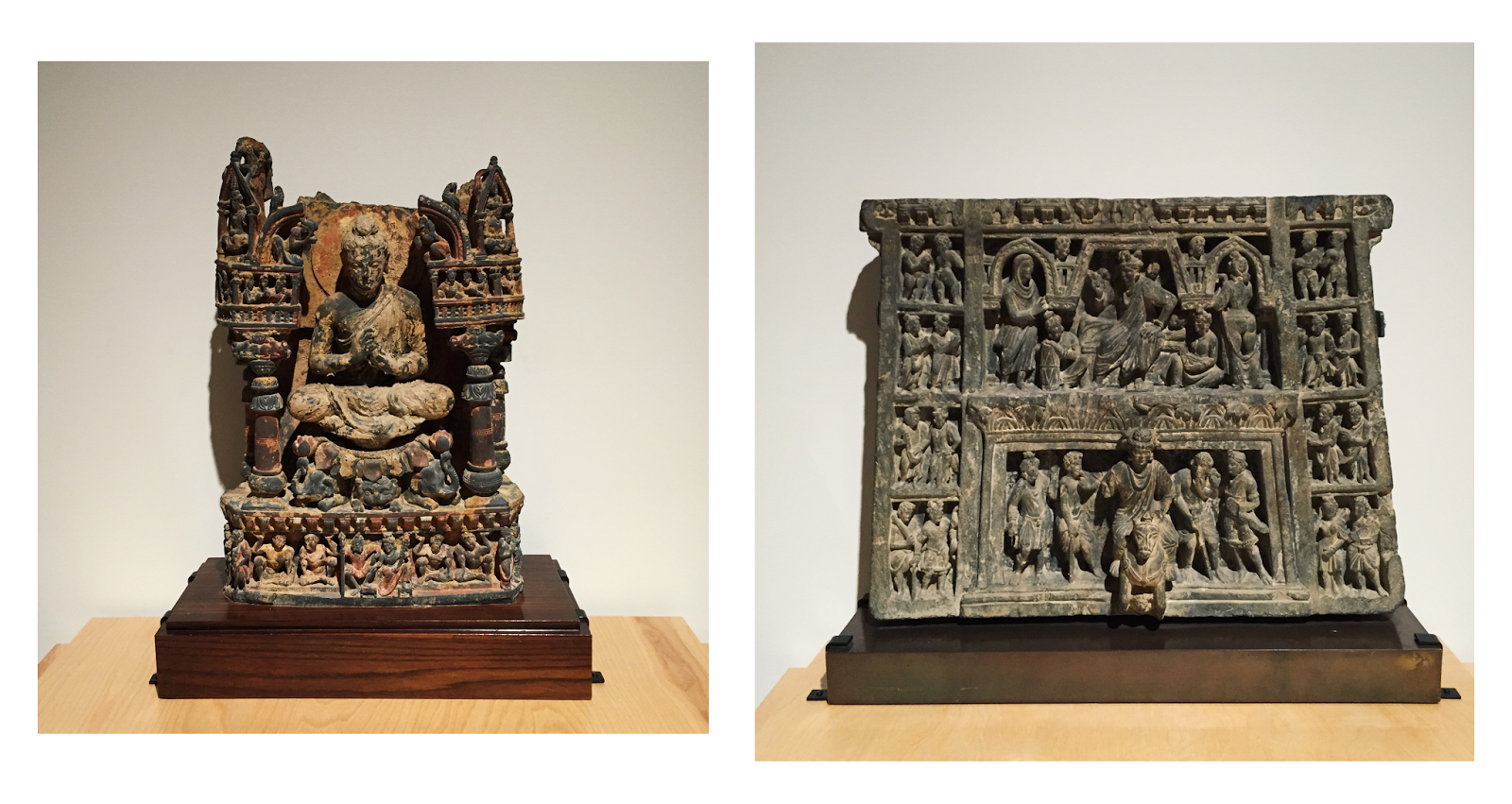
Left: Teaching Buddha - Gandhara, Pakistan - 2nd - 3rd century
Right: The Great Departure -  Gandhara, Pakistan - 2nd - 3rd century


Left: Seated Buddha - Tibet - 14th century
Right: Stupa - Khmer, Cambodia, Bayon style - 13th century


Center: The Quartered One - Louise Bourgeois - 1964-5
Right: Fée Couturière - Louise Bourgeois - 1963


Pomo baskets - Pomo people, northern California, no date


Untitled - Ruth Asawa - 1953 - 1965


Left: Proposal: A Geodesic Hangar, Plan Projection, Geodesic Dome, Diamonds of Fiberglass Laminate - Buckminster Fuller - 1951
Right: Mother in Metamorphosis Idolized/The Kathredal (A glimpse of Heaven's intermediate grandeur) - A. G. Rizzoli - 1938

Interesting personal connection: my mother was involved in the discovery of Buckminsterfullerenes (bucky-balls), carbon nanostructures that resemble Buckminster Fuller's geodesic domes. My mother and other graduate students were not credited in the Nature paper, nor acknowledged in the Nobel Prize for their work. 


Latin Studies - Al Taylor - 1985


Wow! Signal - Jerry R. Ehman, SETI, Ohio State University - 11:16 PM EDST, August 15, 1977

The most popular exhibit on Instagram and Facebook from peers that visited BAM/PFA. Leave it to STEM majors to find this piece of astronomy history. This snip of narrowband radio signal has extraterrestrial and non-solar characteristics. As usual, link out to Wikipedia.


"Home-for-All" in Rikuzentakata - Toyo Ito, Kumiko Inui, Sou Fujimoto, Akihisa Hirata - 2012


Origin of the Species - Ben Rivers - 2008

There is a film projected into the shack that I watched about a minute of: woodlands, the shack, etc.


Left: Untitled - Gordon R. Ashby - 1971
Right: Plate decorated with rustic figures - Bernard Palissy - 1550 - 1600


Within, S. W. S. - Avery Preesman - 2008-9


Tomás Saraceno - 2015

I am fond of spiders and almost missed this exhibit on my way out. These are spider webs from various species.